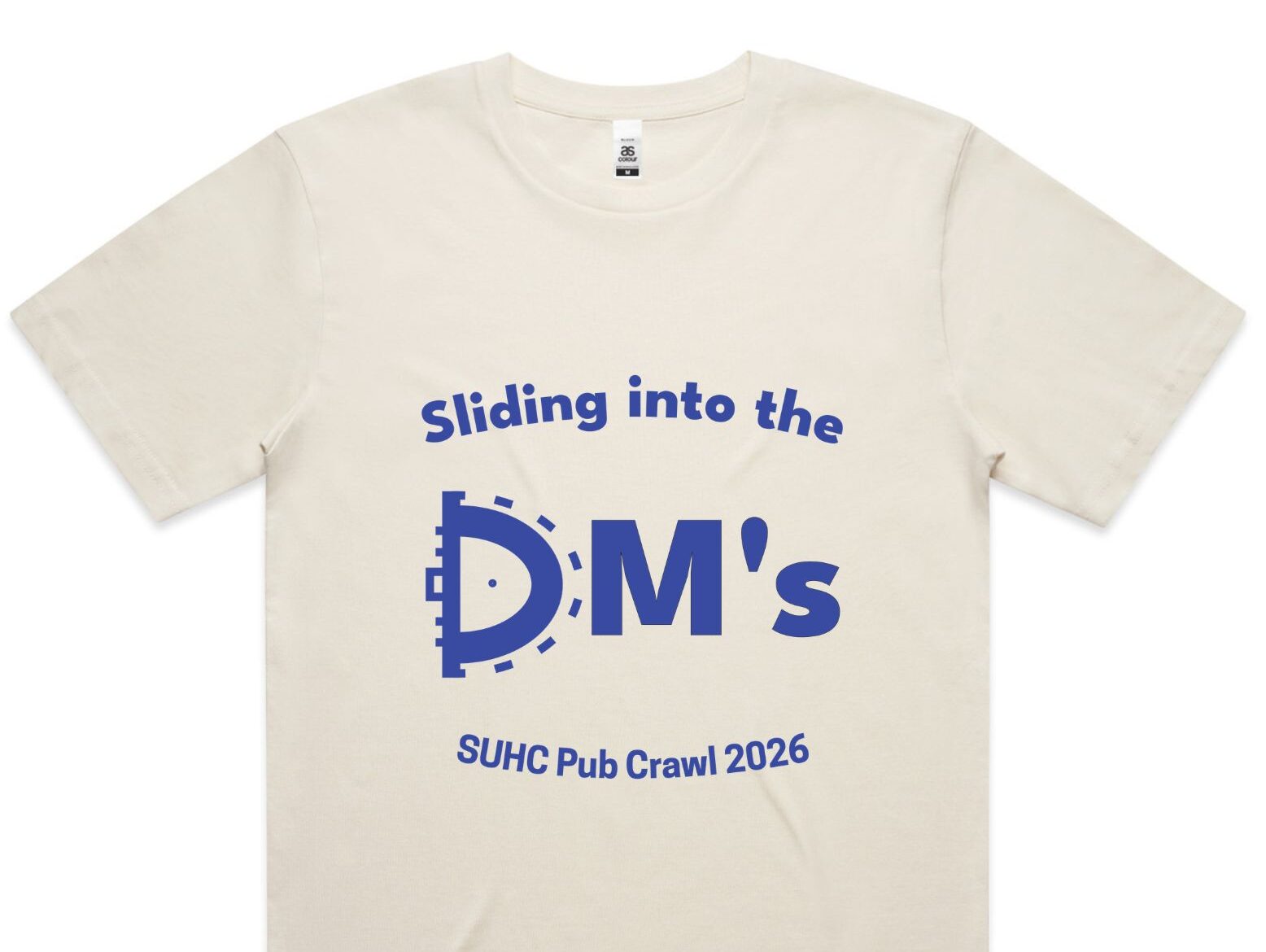
Pub Crawl T Shirt for 30 May
23/04/2026



The 2026 winter hockey season registration has opened. Sign up now for early bird rates and save money. Men’s Masters – sign up now before pre-season. Your early bird rate ends 22 Feb Go to the Registration page now on the main menu to sign...


Sydney University Hockey Club is pleased to offer the opportunity to apply for a refund of your fees. Up to two players will be able to receive a refund of your SUHC playing fees, to help support you during your time in Sydney. This has...

WE’RE BACK! 🔥🏑 SUHC hockey is BACK for 2025! 🙌 Pre-season/tryouts are kicking off this week – time to dust off the shinnies and hit the Bruce Pryor turf 💦 Plenty of good times, fun nights and premierships await! 🏆 Sign up here for the...
Hi Everyone – Happy New Year. The new committee is looking forward to providing you with a great new season in 2025. For all the fun, action and stats in 2024 please see the Annual Report in the Club page See you out on the...

If you are an elite athlete and wish to apply for the University of Sydney Elite Athlete Program (EAP) please enquire and apply at this link. This is an excellent opportunity for emerging and talented players. Scott Barker – Director of Hockey

Resolution for SUHC Annual General Meeting on 26 November 2024 Adoption of New Constitution To consider and, if agreed by special resolution, to replace the Club’s current constitution with a new Constitution in the form annexed to this notice. Reasons for Adopting New Constitution The...

TICKET SALES HAVE NOW CLOSED FOR 2024. ———————————————————— It’s that time of year again! Finals are in full swing and Preso Night is coming in hot! We are at the TAG Grandstand on Saturday the 12th October. We are kicking the night off at 6:00pm...

Molly Robinson has created a profile with the Australian Sports Foundation to request financial support for her participation in the Australia U18s national championship. Molly is 16 years old and has a bright future. She is currently a member of our 1st grade team. Support...

There are some great opportunities for junior holiday and junior development programs. Suitable for beginners and experienced players. Go to the Juniors page for more details.

Orders have now closed, thank you. Feel the rhythm, feel the rhyme, get on up – IT’S PUB CRAWL TIME! It’s time for the 2024 SUHC Pub Crawl and this is one you won’t want to miss. To confirm your spot on this year’s crawl,...

Sydney University Hockey Club is pleased to offer the opportunity to apply for a refund of your fees. Up to two players will be able to receive a refund of your SUHC playing fees, to help support you during your time in Sydney. This has...

Registration is now open. Choose Register on the main menu or click this link.


Summer Hockey for Jan 2024. Update: Entries have now closed for Summer Hockey. 1. We will run a four night preseason comp from Tuesday 9 Jan until Tuesday 13th February (including a 5th night in case there are lots of teams or for finals matches)....

Click Here for juniors to try hockey. No cost. All details in the link.

Great article about Kendelle Tait, her participation in NSWIS and some excellent observations. Kendelle is one of our talented younger stars of SUHC Women’s First Grade team.

A unique moment in world sport took place at the Bruce Pryor Hockey Field at Lidcombe on Saturday when Michael “Bott” Irby ran out with Sydney University Hockey Club’s 4th Grade team to play in his 1000th game for the Club. “This is an amazing achievement,” SUHC President Ant McInnes said...

28TH JULY – 15TH SEPT. 2023 Sydney Uni Hockey Club is proud to offer an 8-week Junior Development sessions coached by National and State Players. The focus of the program will be on developing fundamental skills including passing/receiving, positioning and shooting. Players will also learn...
Feel the rhythm, feel the rhyme, get on up – IT’S PUB CRAWL TIME! It’s time for the 2024 SUHC Pub Crawl and this is one you won’t want to miss. To confirm your spot on this year’s crawl, make sure to buy your themed...

Written by Bridget Fagan The Dick Barnard Sporting Scholarship is a celebration of indigenous women in sport and of field hockey as a whole. The scholarship is awarded annually (or when applicable) to a female indigenous student at The University of Sydney who is a...


Season details enclosed from SMHA. Any queries please speak to Fitz. At this stage all matches in 2023 will again be at Sydney Hockey Centre (Olympic field and Pitch 2) Some of the important preliminary details for the commencement 2023 season to enable you...

We are pleased to announce that the Sydney Masters 3rd grade competition trophy (Masters Division) has been named the Michael Irby Premiership Cup. This is a fabulous recognition of the commitment of our club legend, Michael “Bott” Irby, to this competition. Bott has been heavily...
Sydney Uni Hockey Club Junior Development Summer Program When: 26 Oct 2022 – 8 Feb 2023 SUHC is proud to offer an 11- week Junior Development Course for all players aged 13-16 including Goalkeepers. The focus of the program will be on teaching the fundamental skills including passing/receiving, positioning, and...

PREMIERS! A big congratulations to our Junior U/11s team who won a Joint Premiership on the weekend! Our club’s first premiership of the season! A great contest against @poola_gram in the Grand Final, the two teams could not be separated finishing 2-2 after full time...

Women’s 4th Grade faced off against MosHarbour at the lovely time of 9am at Olympic Park. A win here would more than likely secure a spot in the finals, so there was plenty to play for. As often happens with these 9am games, we were a...

Sydney Uni 3, Easts 0. Scorers: Dyson, Crabb, Briggs Well, the Sydney Uni Masters team faced its ‘do or die’ match last night – beat Easts and make the semi finals; not beat Easts and spend another year in the geriatric hockey wastelands. For the...

Threatening clouds and a sprinkle of rain. Ben “Just-gotta-go” Hardy conveniently ducked away at the start of the game so Ant had to lose the jacket and start in the conditions. We were playing Ryde, a team with more playing shirt styles than you’ve had...

SUHC (True) LEGENDS As the season ending approaches, our mens master’s team, SUHC Legends, is in the top 4. It has been a difficult season as we, and our other masters’ teams, have struggled to get full teams to compete. Legends lost 6 players this...

The Crowd went “OOooooooo” The Crowd went “AHHhhhhhhhh” The Crowd Went “Hot Damn” as the se—st team in SUHC* took the field to take on Moorebank-Liverpool, and boy wasn’t there a score to settle. They had beaten us in Round 1 earlier this year, but...

For the first time in the Club’s history we have appointed a Junior Development Officer (JDO). Congratulations James Crabb. Jimmy’s role is to develop junior hockey at Sydney Uni including all Junior teams with an initial focus on Under 9’s, 11’s and 13’s. James will...
After opening our season with a resounding defeat to Mac Uni, it was always a concern as to what this year was going to be like. Fortunately though, the men in Blue and Gold got themselves organised, focused and went the next four games undefeated...

Sydney Uni 9th grade vs Hornsby 3 – 1:30pm Sunday 24th April 2022 at Pennant Hills. The 9th grade women continue their undefeated run this season with a huge 8-1 victory over Hornsby. With many of the team feeling worse for wear after the wedding...
How good is hockey! It is great to be back playing again. Now if we can get it to stop raining…become immune to CoVid and solve world peace well how good would that be! Results. All teams have got off to a...

SL1 – Round 3 – 9 April: The new and always improving Mens Fours have maintained some areas for development through the start of the 2022 season. A tough draw has seen us go up against favourites UTS and Ryde-twice in the first three weeks....

T6s had a frustrating start to the first game of the season. With the match running late and a missing umpire, we ended up losing almost half of the first quarter. After such a chaotic start, we started on the back foot, mostly confined to...

Mens trials schedule has been updated for Sat 12 Mar. Please see Mens page.

Men’s trial times have been updated for Sat 26 Feb. See Men’s page.

Updates have been made to Mens internal trials, external trials and training times. Internal trials start Sat 19 Feb for all grades. Go to the Men’s page for details.

Sydney University Hockey club, in conjunction with the support of a generous donor, is pleased to offer the opportunity to apply for a refund of your fees. Up to two players through the below application process, will be able to receive a refund of your...

The Board has now signed off on the 2022 Competition Rules and Main Season Draw. The Competition Rules are located on the SMHA website under RESOURCES then SMHA Resources The Main Season Draw is located on the front page of the website. We have removed...

For upcoming women’s trials Please complete this trial availability form Trial game’s locations are also updated on the Women’s page.

If anyone is interested in trialling for SUHC Men’s and Women’s Premier squad (1st 2nd and 3rd grade) please feel free to attend the training sessions. Women’s – Wednesdays 2nd February 6.30pm at Bruce Pryor hockey field Men’s – Thursdays 3rd February 6.30pm...

The 2022 hockey season is just around the corner and if you register early, you can benefit from SUHC’s exclusive “early bird” rates. Early bird rates are available until 28 February for Masters and 31 March for all other players. Please click on the Register...

Registrations for Summer Comp 2022 are now open, closing on Jan 14! By popular demand, this will be a SOCIAL comp for everyone held on Tuesday nights ONLY. Click on the Register menu item. We know it’s a busy time of year, but please make...

Check out the Annual Report for 2021 in Our Club menu. Lots of great material, records, achievements and wonderful memories even in the short year.
Interested in a paid role as Premier Women’s Coach and Junior Development Officer? We are excited to offer this new role for the club. If you or a suitable candidate are interested then apply for the role here.

SUHC Annual General Meeting: Sunday 21st November 3pm via Zoom. SUHC needs your help! We are a volunteer-run club and without the tireless effort of those working behind the scenes, we would not be the successful club that we are today. The most important business...

The Master’s and Junior’s competitions have been cancelled. This means the 2021 season has officially ended for all teams. We are waiting for more information about refunds from competition organisers, so please stay patient. We will let you know when information becomes available. A HUGE...

Please see the joint statement from the Women’s Metro and Men’s competitions, confirming the abandonment of the 2021 season. Sydney North Women’s Competition have also cancelled the remaining 2021 season. More communication including financial info will be sent out in due course. The Master’s competition...

Due to the current stay-at-home orders, all matches and trainings are cancelled until Friday 16th July. We do not know what will happen after that date, however Hockey NSW is strongly recommending that any competitions or trainings in Greater Sydney don’t start until the week...

At this stage, the stay at home orders for Greater Sydney are in place until 11:59pm Friday 9th July 2021 which means no community sport (either training or a match) can proceed in greater Sydney until after that date. The Bruce Pryor field is closed...
All junior’s, men’s and women’s games on 26th/27th June have been cancelled. All SUHC training sessions are cancelled until June 29. This is in line with the recommendations from NSW Health and Hockey NSW. Hockey NSW will assess the situation and updated government advice...

The 2021 HockeyOne draw has now been finalised. Scott Barker anticipates SUHC will have a number of players involved throughout the tournament In the NSW Pride. The two games at Olympic Park are currently Sat 16 Oct and Sat 30 Oct. Pictured is Jess Parr...
Another club milestone last weekend! Congratulations to Men’s 5th Grade (SL2) and Masters goalie Crichton Smith who played his 700th game for SUHC on Saturday. Crichton first played for SUHC in 1999 and has been a very reliable keeper and field player in Men’s and...

WE ARE SYDNEY UNI’S PREMIER SPORTS CLUB OF THE YEAR! With over 40 sports clubs at Sydney Uni this is the first time in the club’s history we have ever won the award! 2020 was SUHC’s most successful season yet. In the women’s side, the...

Be aware of some changes to the trial games times. The Men’s page is the master reference. Times are: 20th of March: At Ryde v Ryde: PL3: 12:30 pm SL1: 2:00 pm SL2: 3:30 pm SL5: 5:00 pm SL6: 6:30 pm

On The Ground Consulting is supporting our coaches. Sydney Uni Hockey club is pleased to announce On the Ground Consulting as our latest partner, specifically supporting the development of and ongoing commitment of our coaches. The club is delighted to have the company join us for the...

Mens and Womens trials are commencing. The women start 21 Feb and the men on 27 Feb. See the respective webpages for all the details.

So many kids learn to play hockey every year. We create a fun and supportive environment to learn. Come and give it a go! Dates (2021): January (27 & 28), February (3, 4, 10, 11, 17, 18, 24 & 25) Time: 6:00 – 7:15pm Location: Bruce Pryor...
SUHC AGM – Sunday 22nd November 4pm via Zoom. SUHC needs your help! We are a volunteer run club and without the tireless efforts of those working behind the scenes, we would not be the successful club that we are today! The most important business...

Sydney Uni Hockey Club is running mixed summer hockey. It is an 8 week 7-aside Mixed Summer Comp at the Bruce Pryor Hockey Field, Cumberland. Dates and Draw: 27th October – 15th December Tuesday Night – competitive draw Wednesday Night – social draw Cost: $450...
We are now allowed to have 400 spectators at Bruce Pryor field for the finals. This is in line with revised NSW Health guidelines. However it is still important to maintain the physical distancing at the field. Here is the revised COVID safe plan. This...

EXCITING NEWS! Our Women’s First Grade (ML1) and Second Grade (ML2) matches will be LIVE-STREAMED THIS SUNDAY as they face off against the Ryde Hunters Hill District Hockey Club Panthers! ML2 – 10:30am ML1 – 12:00pm Make sure to tune in to the action here...
Community sport will continue to run as normal for now, with a few poignant reminders from Hockey NSW: Get in, play, get out. Arrive no more than 30 minutes before your game and don’t stick around to watch the game after you Essential participants only:...
It is fantastic to be back playing hockey. However there are some very specific and important procedures we need to follow. Firstly keep in regular contact with the website posts and Facebook as COVID conditions change. Secondly we have procedures and rules for our Bruce...

Sydney Uni Hockey Club is back out on the pitch! Following on from the announcement by NSW Sports Minster Geoff Lee that all community sport competitions can return from 18 July, hockey is back, although our comps will all have a shortened season. The exception is...
Great news SUHCers: we have been approved to start training! There are a few key things to know before you rush out the door with your stick and shinnies: When will you begin training? The Premier Squads will start next week. The lower grade Men’s...
There have been some exciting announcements about the recommencement of sport, and your diligent committee members are working away behind the scenes to ensure we are ready. As we have said many times before, the wellbeing of our community is our greatest priority and we...
I hope you and your families are all safe and healthy. The committee wanted to touch base and let you know where we are at in planning and progress for the 2020 season. Season update Although our governing Men’s, Women’s, Master’s and Junior’s associations originally planned to...
The Sydney University Hockey Club committee met on the weekend via video conference to discuss the future of the season and our club. In alignment with Hockey NSW and NSW Department of Health, all hockey training has been cancelled until further notice. This includes the...
Director of Hockey Scott Barker has advised that due to COVID-19 all individual training sessions have now concluded. Just as for general training we will have to wait until circumstances are more favourable before we recommence training. Apologies however pursue your own fitness and skills...
COVID-19 update Tuesday 17 March Hockey NSW released a statement today strongly recommending that all associations and clubs cease training and games until May. In support of this advice, all Sydney University Hockey Club Women’s, Men’s, Master’s and Junior’s matches and training have been postponed until...
Sydney needs O35 Masters for State Champs. Calling for eligible players to nominate to play for the Sydney Over 35 team to compete in the NSW State Championships to be held at Moorebank 3rd through 5thApril. The tournament serves as the basis for selection to the...
Check out the smhockey.com.au website. Premier (4 teams – no Ryde) 25/02/2020 | Syd Uni 1 v UTS 1 | 21:35:00 on Olympic Sydney Cup (8 teams) 25/02/2020 | Syd Uni 2 v UTS 2 | 20:00:00 on P2 Legends (8 teams) 26/02/2020 | Macarthur...

SUHC is running “Come Try Hockey”. It will run at the Bruce Pryor Hockey Field at Lidcombe. Dates and Times: Wednesday, 19 February, 5:30 – 6:30pm – Moved to Thursday 20th Thursday, 20 February, 5:30 – 6:30pm – NEW Saturday, 22 February, 10 – 11am...

Congratulations to Emma Scriven and Kyah Gray for their selection in the National Women’s Squad for the next Indoor World Cup. This selection comes after their performance at the recent National Championships in Wollongong. Kyah has already represented Australia in two World Cups in 2015...

8th Feb Register here for your team social hockey small sided games. Details of the day are here.
Welcome to the SUHC Bushfire Fundraiser Appeal! Feb 8 9:30 am @ Bruce Pryor. Family’s, friends and furry companions of SUHC are invited to come down for a day of hockey, music, raffles and more. Let’s open our wallets to the much-needed fire relief for...
After the 2019 SUHC AGM was held on the 17th of November, we are pleased to announce the below roles have been filled. Executive Committee: – President – Liza Roche – Club Captain – Josef Visser – Treasurer – Anne Simmons – Secretary – Em...
The Sydney University Hockey Club is pleased to confirm the services of Scott Barker as Director of Hockey have been secured for the next three seasons. Scott has worked with the club and broader SUSF organisation since 2012 to develop deep relationships, attract talent and...

Sunday 17th November 4pm at The Glebe Help your club, give back, contribute with a great team. We are a volunteer run club and we need you to make it the successful club that we are today! Take one of the many roles. Feel good...

Men’s 3rd Grade are PL3 Premiers of 2019! They sealed the deal with a 2-1 win over Moorebank.

Well done to our Masters A team who fought valiantly in their Grand Final last night but unfortunately went down 2-3 to Briars in a close comeback from 0-3 down. Still club legends. Still a generation of inspiration

A mighty effort and a mighty journey for Womens 9th Grade. They are the 2019 runners up. The first day of spring, warmth was in the air for the Sydney North’s Womens Hockey Association Grand Finals. Sydney Uni Hockey Club’s 9th Grade womens were prepped...
Congratulations to the Womens 9th Grade for making the Grand Final. Superb achievement and a great testament to teamwork and camaraderie. Support our 9th grade in their final challenge. Details are: Sunday September 1, Pennant Hills Park, 10:00am v Norths D. Go Go Go!
Teams Our 9 women’s teams are performing strongly across the two competitions. After years of petitioning, we now have 6 teams in the Metro competition, the only club in Sydney to be able to say this. Participation rates are high (although we are coming into...

Congratulations to the seven SUHC men and women selected in the NSW Pride state squad for the new AHL format Hockey One. Well done to: Matt Fleming, Alice Arnott, Emma Scriven, Greta Hayes, Jaime Hemmingway, Jess Parr and Renae Robinson. This is an outstanding achievement...

1st Grade Women were well represented across 6 different associations at State Championships in Bathurst this weekend. Claudia Johnston, Erin Lidbetter and Kendelle Tait’s North West Sydney team went on to win the title after beating Emma Scriven’s Northern Sydney & Beaches team 3-2 in...
Huge congratulations to Wendy Moylan who is the first woman in the club to reach her 400 game milestone. Wendy first started playing for SUHC back in 2000. Since then she has only had two seasons off in 2009 and 2018. Her expertise ranges from...

Australian Championships – congratulations to Kendelle Tait and the U18s NSW Blues who came away with Silver, only going down to 3-2 to QLD with 30s to go. Kendelle was also awarded Player of the Match in the semi-final.

Well done to Rashil Jetley and Connor Tuddenham and the U18s NSW State Team who came away with the Bronze! The semi-final ended in an epic penalty shootout with 12 attempts required for WA to prevail 5-4, followed by a 2-1 bronze match victory over Victoria....

Congratulations to our First Grade Women’s team for their 2-1 win over Stanford University with goals to NSW players Jaime Hemmingway and Kendelle Tait. An excellent contest with this prestigious Stanford team at Bruce Pryor Hockey Field. A great display of hockey and sportsmanship. A big thank you to Stanford...

Another congratulations goes to SUHC’s Kyah Gray who was awarded 2018 Indoor Player of the Year at the Hockey NSW Awards Night on Saturday! Well done Kyah!

A big congratulations goes to our Kendelle Tait for being selected in the U18 NSW Blues team! We are very proud of you and wish you all the best!

Greta Hayes has made her debut for the Hockeyroos. This is the culmination of a heck of a lot of hard work from Greta. Congratulations! Greta debuted for SUHC in 2011 as an U/15s NSW player in 3rd grade and went on to win the...
Big congratulations to Emma Scriven for her selection in the Australian Womens Open Indoor Team. Emma will be heading to Austria with the national team in November.
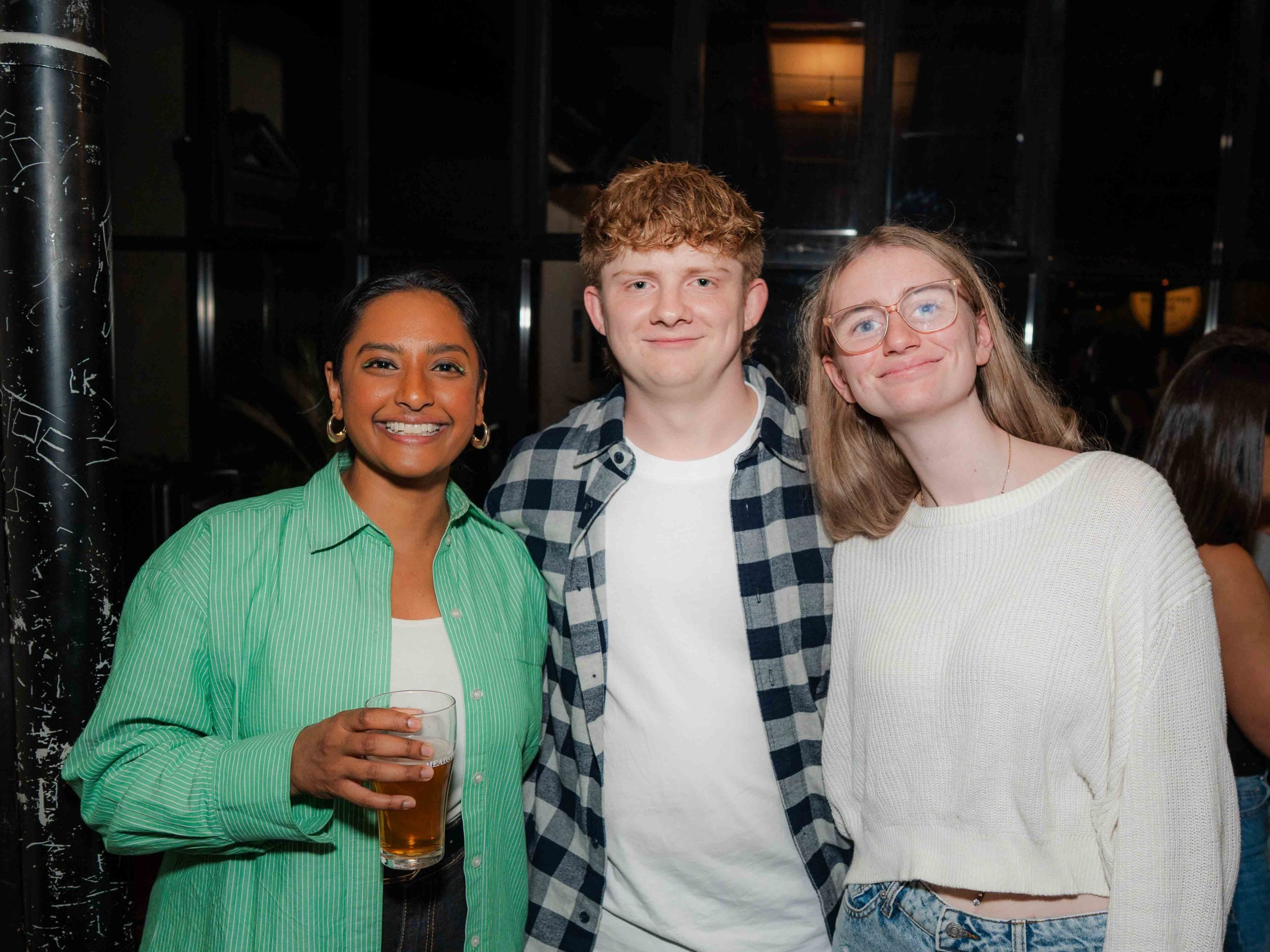
Sat 31 May The Royal Darlington 7:30pm Grab 5-10 talented friends and join us for a spirited fun night. Who is the team or group who wants bragging rights?
Entries have now closed. Enter our social 7-aside comp now for Feb 2025. Instructions below for team managers and HNSW rego for each player. 1. Monday nights from February 3rd until March 10th (subject to number of teams that enter). Games will be played between...

Update: Spring hockey entry has now closed. —————————————————— Enter Spring Hockey now for Oct 2024. 1. Tuesday nights from October 8th until November 26th (subject to number of teams that enter). Games will start at 7, 7:45 and 8:30pm. 2. Teams will be allocated games...

People of SUHC Whats your name, age, position and (nickname) Sanjay Hettige, 35, (no nickname), left half What brought you to the club? Wanted to get back into hockey. Hadn’t played since high school previously went to University here, so I thought it would...
In a clash against the top-of-the-table Barbarians, our club-spirit Prem Masters team took on a group of guys who happened to be in the same uniform. The match kicked off with a series of clever plays down the left-hand side. Our winger, seemingly in a...

The 2024 Preseason Competition has now concluded. Thank you to all the players and umpires who participated in the preseason competition for 2024. Congratulations to the winners of each division and to our two SUHC Masters teams. Premier League (The Merv Goodridge Cup) – Manly...

Click Here for a free junior development program. All details in the link.
It is that time of year again when we come together as a community to reflect on our achievements, discuss important matters, and plan for the future of the Sydney University Hockey Club. We are pleased to announce our upcoming Annual General Meeting (AGM), and...

Update: Ticket sales have now closed. It’s that time of year again! Finals are in full swing and Preso Night is coming in hot! We’re back at the TAG Grandstand on the 14th October. We are kicking the night off at 6:30pm. Tickets are $140...
Sydney University Hockey club, in conjunction with the support of a generous donor, is pleased to offer the opportunity to apply for a refund of your fees. Up to two players through the below application process, will be able to receive a refund of your...

Preseason Summer Hockey is back by popular demand in 2023! Everything you need to know and registration can be found here. If you’re a team needing a player, a player needing a team, or just have any general questions, shoot Joe an email. Registrations close...

Our Annual Awards Evening is fast approaching and all the details are below. Date: 15th October 2022 Time: 6:30pm Location: The TAG Family Grandstand (at Main Campus) Two course dinner and drinks Ticket sales have now closed. Email to [email protected] for any...

Women’s Indoor Hockey While the winter hockey season has come to an end it’s not time to pack away those shin pads just yet! There are two competitions and grades to choose from. Before completing the registration please contact the Women’s VP Sarah Puglisi at [email protected] to...

SUHC Annual General Meeting: Sunday 16th October 4pm at The Glebe Hotel. At the meeting all committee positions will be declared vacant and open for nominations for the 2023 season. Nominations can be submitted prior to the AGM by emailing [email protected] or can be taken from...

Perpetual award nominations are OPEN After two years of half seasons, our perpetual awards are back. Our executive committee need your help to decide who will be in the running for our some of our clubs most prestigious awards for players and our fabulous contributors....
For the first time in the Club’s history we have appointed a Junior Development Officer (JDO). Congratulations James Crabb. Jimmy’s role is to develop junior hockey at Sydney Uni including all Junior teams with an initial focus on Under 9’s, 11’s and 13’s. James will...
After opening our season with a resounding defeat to Mac Uni, it was always a concern as to what this year was going to be like. Fortunately though, the men in Blue and Gold got themselves organised, focused and went the next four games undefeated...
Sydney Uni 9th grade vs Hornsby 3 – 1:30pm Sunday 24th April 2022 at Pennant Hills. The 9th grade women continue their undefeated run this season with a huge 8-1 victory over Hornsby. With many of the team feeling worse for wear after the wedding...
How good is hockey! It is great to be back playing again. Now if we can get it to stop raining…become immune to CoVid and solve world peace well how good would that be! Results. All teams have got off to a...
SL1 – Round 3 – 9 April: The new and always improving Mens Fours have maintained some areas for development through the start of the 2022 season. A tough draw has seen us go up against favourites UTS and Ryde-twice in the first three weeks....
T6s had a frustrating start to the first game of the season. With the match running late and a missing umpire, we ended up losing almost half of the first quarter. After such a chaotic start, we started on the back foot, mostly confined to...
Mens trials schedule has been updated for Sat 12 Mar. Please see Mens page.
Men’s trial times have been updated for Sat 26 Feb. See Men’s page.
Updates have been made to Mens internal trials, external trials and training times. Internal trials start Sat 19 Feb for all grades. Go to the Men’s page for details.
Sydney University Hockey club, in conjunction with the support of a generous donor, is pleased to offer the opportunity to apply for a refund of your fees. Up to two players through the below application process, will be able to receive a refund of your...
The Board has now signed off on the 2022 Competition Rules and Main Season Draw. The Competition Rules are located on the SMHA website under RESOURCES then SMHA Resources The Main Season Draw is located on the front page of the website. We have removed...
For upcoming women’s trials Please complete this trial availability form Trial game’s locations are also updated on the Women’s page.
If anyone is interested in trialling for SUHC Men’s and Women’s Premier squad (1st 2nd and 3rd grade) please feel free to attend the training sessions. Women’s – Wednesdays 2nd February 6.30pm at Bruce Pryor hockey field Men’s – Thursdays 3rd February 6.30pm...
The 2022 hockey season is just around the corner and if you register early, you can benefit from SUHC’s exclusive “early bird” rates. Early bird rates are available until 28 February for Masters and 31 March for all other players. Please click on the Register...
Registrations for Summer Comp 2022 are now open, closing on Jan 14! By popular demand, this will be a SOCIAL comp for everyone held on Tuesday nights ONLY. Click on the Register menu item. We know it’s a busy time of year, but please make...
Check out the Annual Report for 2021 in Our Club menu. Lots of great material, records, achievements and wonderful memories even in the short year.
Interested in a paid role as Premier Women’s Coach and Junior Development Officer? We are excited to offer this new role for the club. If you or a suitable candidate are interested then apply for the role here.
SUHC Annual General Meeting: Sunday 21st November 3pm via Zoom. SUHC needs your help! We are a volunteer-run club and without the tireless effort of those working behind the scenes, we would not be the successful club that we are today. The most important business...
The Master’s and Junior’s competitions have been cancelled. This means the 2021 season has officially ended for all teams. We are waiting for more information about refunds from competition organisers, so please stay patient. We will let you know when information becomes available. A HUGE...
Please see the joint statement from the Women’s Metro and Men’s competitions, confirming the abandonment of the 2021 season. Sydney North Women’s Competition have also cancelled the remaining 2021 season. More communication including financial info will be sent out in due course. The Master’s competition...
Due to the current stay-at-home orders, all matches and trainings are cancelled until Friday 16th July. We do not know what will happen after that date, however Hockey NSW is strongly recommending that any competitions or trainings in Greater Sydney don’t start until the week...
At this stage, the stay at home orders for Greater Sydney are in place until 11:59pm Friday 9th July 2021 which means no community sport (either training or a match) can proceed in greater Sydney until after that date. The Bruce Pryor field is closed...
All junior’s, men’s and women’s games on 26th/27th June have been cancelled. All SUHC training sessions are cancelled until June 29. This is in line with the recommendations from NSW Health and Hockey NSW. Hockey NSW will assess the situation and updated government advice...
The 2021 HockeyOne draw has now been finalised. Scott Barker anticipates SUHC will have a number of players involved throughout the tournament In the NSW Pride. The two games at Olympic Park are currently Sat 16 Oct and Sat 30 Oct. Pictured is Jess Parr...
Another club milestone last weekend! Congratulations to Men’s 5th Grade (SL2) and Masters goalie Crichton Smith who played his 700th game for SUHC on Saturday. Crichton first played for SUHC in 1999 and has been a very reliable keeper and field player in Men’s and...
WE ARE SYDNEY UNI’S PREMIER SPORTS CLUB OF THE YEAR! With over 40 sports clubs at Sydney Uni this is the first time in the club’s history we have ever won the award! 2020 was SUHC’s most successful season yet. In the women’s side, the...
Be aware of some changes to the trial games times. The Men’s page is the master reference. Times are: 20th of March: At Ryde v Ryde: PL3: 12:30 pm SL1: 2:00 pm SL2: 3:30 pm SL5: 5:00 pm SL6: 6:30 pm
On The Ground Consulting is supporting our coaches. Sydney Uni Hockey club is pleased to announce On the Ground Consulting as our latest partner, specifically supporting the development of and ongoing commitment of our coaches. The club is delighted to have the company join us for the...
Mens and Womens trials are commencing. The women start 21 Feb and the men on 27 Feb. See the respective webpages for all the details.
So many kids learn to play hockey every year. We create a fun and supportive environment to learn. Come and give it a go! Dates (2021): January (27 & 28), February (3, 4, 10, 11, 17, 18, 24 & 25) Time: 6:00 – 7:15pm Location: Bruce Pryor...
SUHC AGM – Sunday 22nd November 4pm via Zoom. SUHC needs your help! We are a volunteer run club and without the tireless efforts of those working behind the scenes, we would not be the successful club that we are today! The most important business...
Sydney Uni Hockey Club is running mixed summer hockey. It is an 8 week 7-aside Mixed Summer Comp at the Bruce Pryor Hockey Field, Cumberland. Dates and Draw: 27th October – 15th December Tuesday Night – competitive draw Wednesday Night – social draw Cost: $450...
We are now allowed to have 400 spectators at Bruce Pryor field for the finals. This is in line with revised NSW Health guidelines. However it is still important to maintain the physical distancing at the field. Here is the revised COVID safe plan. This...
EXCITING NEWS! Our Women’s First Grade (ML1) and Second Grade (ML2) matches will be LIVE-STREAMED THIS SUNDAY as they face off against the Ryde Hunters Hill District Hockey Club Panthers! ML2 – 10:30am ML1 – 12:00pm Make sure to tune in to the action here...
Community sport will continue to run as normal for now, with a few poignant reminders from Hockey NSW: Get in, play, get out. Arrive no more than 30 minutes before your game and don’t stick around to watch the game after you Essential participants only:...
It is fantastic to be back playing hockey. However there are some very specific and important procedures we need to follow. Firstly keep in regular contact with the website posts and Facebook as COVID conditions change. Secondly we have procedures and rules for our Bruce...
Sydney Uni Hockey Club is back out on the pitch! Following on from the announcement by NSW Sports Minster Geoff Lee that all community sport competitions can return from 18 July, hockey is back, although our comps will all have a shortened season. The exception is...
Great news SUHCers: we have been approved to start training! There are a few key things to know before you rush out the door with your stick and shinnies: When will you begin training? The Premier Squads will start next week. The lower grade Men’s...
There have been some exciting announcements about the recommencement of sport, and your diligent committee members are working away behind the scenes to ensure we are ready. As we have said many times before, the wellbeing of our community is our greatest priority and we...
I hope you and your families are all safe and healthy. The committee wanted to touch base and let you know where we are at in planning and progress for the 2020 season. Season update Although our governing Men’s, Women’s, Master’s and Junior’s associations originally planned to...
The Sydney University Hockey Club committee met on the weekend via video conference to discuss the future of the season and our club. In alignment with Hockey NSW and NSW Department of Health, all hockey training has been cancelled until further notice. This includes the...
Director of Hockey Scott Barker has advised that due to COVID-19 all individual training sessions have now concluded. Just as for general training we will have to wait until circumstances are more favourable before we recommence training. Apologies however pursue your own fitness and skills...
COVID-19 update Tuesday 17 March Hockey NSW released a statement today strongly recommending that all associations and clubs cease training and games until May. In support of this advice, all Sydney University Hockey Club Women’s, Men’s, Master’s and Junior’s matches and training have been postponed until...
Sydney needs O35 Masters for State Champs. Calling for eligible players to nominate to play for the Sydney Over 35 team to compete in the NSW State Championships to be held at Moorebank 3rd through 5thApril. The tournament serves as the basis for selection to the...
Check out the smhockey.com.au website. Premier (4 teams – no Ryde) 25/02/2020 | Syd Uni 1 v UTS 1 | 21:35:00 on Olympic Sydney Cup (8 teams) 25/02/2020 | Syd Uni 2 v UTS 2 | 20:00:00 on P2 Legends (8 teams) 26/02/2020 | Macarthur...
SUHC is running “Come Try Hockey”. It will run at the Bruce Pryor Hockey Field at Lidcombe. Dates and Times: Wednesday, 19 February, 5:30 – 6:30pm – Moved to Thursday 20th Thursday, 20 February, 5:30 – 6:30pm – NEW Saturday, 22 February, 10 – 11am...
Congratulations to Emma Scriven and Kyah Gray for their selection in the National Women’s Squad for the next Indoor World Cup. This selection comes after their performance at the recent National Championships in Wollongong. Kyah has already represented Australia in two World Cups in 2015...
8th Feb Register here for your team social hockey small sided games. Details of the day are here.
Welcome to the SUHC Bushfire Fundraiser Appeal! Feb 8 9:30 am @ Bruce Pryor. Family’s, friends and furry companions of SUHC are invited to come down for a day of hockey, music, raffles and more. Let’s open our wallets to the much-needed fire relief for...
The Sydney University Hockey Club is pleased to confirm the services of Scott Barker as Director of Hockey have been secured for the next three seasons. Scott has worked with the club and broader SUSF organisation since 2012 to develop deep relationships, attract talent and...
Teams Our 9 women’s teams are performing strongly across the two competitions. After years of petitioning, we now have 6 teams in the Metro competition, the only club in Sydney to be able to say this. Participation rates are high (although we are coming into...

Sydney Uni has an amazing range of talent and diversity in the Men’s competition, from elite Premier squads to the men who want to learn and develop. Players of all skill and experience level can join Sydney Uni – and you don’t have to be at uni! We always welcome men who share a passion for having fun on the field, support their teammates and improve their game. The 2022 Men’s competition officially commences on the 26th March.

Sydney Uni women enjoy an immense range of talent and depth. We are fortunate to have highly competitive premier league teams that have created great success through many grades for players seeking competition and active fun. With the many teams we have an amazing network of female players passionate about their hockey and tremendously engaged socially as a club. We welcome all players of all skills. You do not have to be at uni.

At Sydney Uni, our goal is to create an environment in which our junior players can develop their skills and love for hockey. We aim to expose our players to role models, build a sound sporting culture and provide an excellent environment in which junior players can develop. Our Director of Hockey has an absolute passion for developing our young players and the Club offers a very successful Emerging Talent Squad (ETS) program for older junior players who are looking to transition to the senior teams.
Pursuing excellence in tertiary studies and elite sport simultaneously can be especially challenging. The right assistance and encouragement is crucial. Get access to a broad suite of invaluable benefits and services alongside the help of skilled and dedicated staff. Elite Athlete Program members are supported to find balance and realise their potential.
If this could be you in 2027, contact the Director of Hockey Scott Barker. Your Application for 2027 should be with Sydney Uni by the end of November.
As a large club we field teams ranging from the elite level to the social level. We have something to offer everyone: a strong junior’s development program, a robust master’s contingent and very successful open men’s and women’s teams catering to all playing abilities. The social side of our club is arguably one of the best in Sydney, leading to strong friendships on and off the field. This combination attracts players from interstate, rural and local areas. Our members do not need to be University of Sydney students to play. For us it is about a memorable experience and community with great competition thrown in for those who want it.

Our uniforms – including shirts, skorts, shorts and socks – are now available at the Cumbo canteen. Check the Club’s WhatsApp for opening times. The canteen also has a wide range of club merchandise – from training singlets to hoodies. Now is the time to get your gear and get ready for the winter season!
As the Director of Hockey part of my responsibility is to implement pathways for Elite Athletes. In partnership with Sydney Uni Sport and Fitness (SUSF) we have access to world class facilities and support service staff (ie. Strength and conditioning coaches, sport nutritionists, sport psychologists etc).
– Scott Barker, Director of Hockey

Pursuing excellence in tertiary studies and elite sport simultaneously can be especially challenging. The right assistance and encouragement is crucial. With access to a broad suite of invaluable benefits and services, alongside the help of skilled and dedicated staff, Elite Athlete Program members are ideally supported to find balance and realise their potential.
Want to join the proud and distinguished group of university graduates, who are leaders both on and off the sporting field? Then you need to be with Sydney University.

As the Director of Hockey, my vision for Sydney University Hockey Club (SUHC) is to deliver the best and most inclusive Hockey experience for all members both on and off the field. With this vision in mind my focus is to create lifelong members and friendships within the hockey family and maximising your enjoyment within Sydney University Hockey Club.
– Scott Barker, Director of Hockey

Great mens masters teams. We play across four divisions catering for all levels of expertise. Additionally off the field Sydney Uni has arguably one of the best cohorts for community, camaraderie, get-togethers and old fashioned friendship. Competition and fun – what more could you ask for?


Sydney Uni Sport and Fitness is a terrific sponsor and provider of professional services. They provide the power of the university’s sporting infrastructure for the benefit of the club and individual hockey players. SUSF sporting resources are excellent so drop in and enjoy all that sporting expertise. Thank you SUSF for your enduring support to Sydney Uni Hockey.

The Toxteth at Glebe is our sponsor pub. Keep an eye on WhatsApp for social functions where you can enjoy their great food and hospitality!